 Korcula Boat Tours
The Best Time for a Boat Trip in Korcula
The best time for boat trips in Korcula is a shorter window than most visitors assume, and picking your week inside it matters more than picking your boat. The tours compared on this site sail from about May to early October; inside that season, the sea swings twelve degrees, the decks swing from empty to packed and back, and the afternoon wind writes its own daily timetable. This guide reads the season the way a local plans it: month by month, wind by wind, with the honest notes on queues, temperatures and the two weeks a year when the jugo makes even the channel boats earn their keep. Open the full boat-trip comparison for Korcula when you have your window - the boats are the easy part.
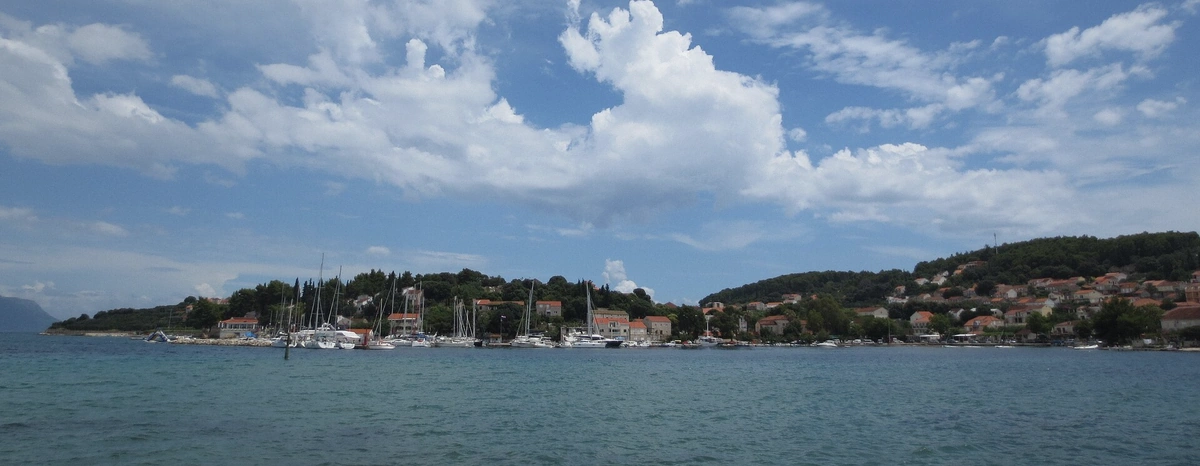
Across the water to Lumbarda - the soft-season view this page plans around. Photo: ModriDirkac, Wikimedia Commons (CC BY-SA 4.0)
Quick answer The one-line answer by month, and the two winds that write the daily timetable
The best time for a Korcula boat trip is June or September: sea above 23°C, the full schedule sailing, and decks at half their August density. July and August deliver the warmest water (24-25°C) and every departure daily - booked weeks ahead. May and October are the value edges: season weather, brisker water, thin crowds. November to April is the archipelago's closed season. Whichever month, the daily pattern holds: morning departures run the calmest water, and the jugo - the south-easterly - is the wind that cancels.
Key takeaways
- June and September win on the three-way trade of warmth, availability and queue length.
- Book August in June: the small-group boats - one hull each - genuinely sell out weeks ahead.
- The wind beats the calendar: check the jugo forecast the night before, not the month when you booked.
The Short Answer: May to Early October
Korčula's boat season runs from about May to early October, and every one of the tours compared here in the comparison lives inside it. The season's shape is set by three curves that do not quite align. Temperature peaks late: the sea is warmest in August, at 24-25°C, comfortable for hours of swimming.
Crowds peak mid: July and August fill every deck, and the queue at a lagoon ladder is a queue. Reliability peaks at the edges: May, June and September see fewer wind cancellations than high summer's heat-driven afternoon blow, and October's gentler seas suit the sheltered-channel cruise longest. Align the three and the answer lands where every returning visitor expects it: June and September are the months when the water is properly warm, the boats all sail, and the deck still has a free rail spot at the good stop.
July is nearly as good and twice as busy; August is the warmest sea and the fullest week of the archipelago's year.
Month by Month on the Water
Sea temperatures are typical values for the Korčula channel read against the schedules of the listings compared here, September 2026; the monthly verdict is ours.
Month by Month on the Water
| Month | Sea | What sails | The honest verdict |
|---|---|---|---|
| May | 19°C | Full schedule from mid-month; jackets on the outward leg | The value opener - brisk water, empty decks |
| June | 23°C | Everything, daily | The sweet spot: warm sea, availability, thin queues |
| July | 25°C | Everything, daily, plus pressure on the small boats | Gorgeous and busy - book early, sail mornings |
| August | 25°C | Everything, at maximum frequency | The warmest water and the fullest decks - reserve weeks out |
| September | 24°C | Full schedule, thinning through the month | The second sweet spot - warm water, settling crowds |
| October | 21°C | Half-days and the channel cruise; explorer days wind down | The quiet finale - swim-brave only after mid-month |
The Wind Calendar: Why Afternoons Differ
Two winds write Korčula's daily timetable, and knowing their names is the difference between a good booking and a lucky one. The maestral is the summer regular: a north-westerly that builds after lunch through the warm months, steadying into the afternoon and adding a friendly chop to open water. Crews plan around it - the archipelago's south-facing bays stay swimmable behind the islands, and the ride home runs with the wind behind.
The jugo is the other personality: a south-easterly that arrives with cloud, raises swell on the exposed stops - the Boka wreck off Mokalo, the open-side lagoons - and, when the meteo alarm rises, cancels departures outright. The seasonal pattern: the maestral is strongest in July and August afternoons (which is why morning departures run the flattest water in those months); the jugo is the year-round wildcard, most common in the shoulder seasons. The booking logic follows: fixed-date holiday plans are safest on channel products - the riviera cruise never leaves sheltered water - while open-water trips (the shipwreck run, the premium snorkel day) deserve a flexible day early in your stay, so a jugo becomes a rebooking rather than a ruin.
Morning or Afternoon Departures
Inside any given day, the morning-versus-afternoon question answers itself with the maestral: morning departures run the calmest water, every listing's schedule agrees, and the swimmers who care about visibility book the 10:00 side of the board. Mornings also suit the sun-math: the Adriatic sun reflects off water and pale deck, and by 13:00 the uncovered stern is a burn risk that no sunscreen fully covers. The afternoon's case is real though - light and thinning decks.
The last anchorage of a 15:00-style departure sits in golden-hour warmth, the day-trip crowds have thinned, and the ride home runs toward the sunset. In July and August, the honest split: mornings for families with small children, snorkellers and anyone who reads swell forecasts; afternoons for couples, photographers, and anyone whose holiday runs late anyway. In May, June and September, the wind dies earlier and the afternoon penalty shrinks - the two slots converge, and availability decides rather than sea state.
Sunset Sails: The Season Inside the Season
Korčula's comparison has no dedicated sunset-sail listing (the island's sunset market runs on smaller private charters), but the sunset mathematics still matter to every afternoon booking. Sunset swings hard across the season: about 20:30 at the late-June peak, drifting to before 19:00 by late September - which changes what an afternoon departure actually delivers. In June, a 15:00 half-day finishes two full hours before the sun drops, with time for dinner after; in September the same slot lands you on the quay at golden hour, and the ride home is the sunset.
Travellers chasing the golden-hour return should book afternoon slots in September and early October, or look at the private-charter market for a true sunset product. The photography note that reviews keep confirming: the channel's evening light on the Old Town walls - landward side, from the water - is the best photograph of the week, and it costs whatever your boat ticket cost.
Booking Windows by Month
How far ahead to book is a season question, and the small-group format of Korčula's best boats makes it a real one. The guide: July and August departures deserve June money - three to six weeks ahead for the small boats (one hull each: Sail Away, the shipwreck run, the premium snorkel day), and one to two weeks for the big-deck products (the catamaran, the grill day). June and September book comfortably a week ahead, though the explorer's three-days-a-week calendar (the Boat Adventure) always deserves early commitment inside your stay.
May and October can be booked on arrival, weather-watching. The terms that make early booking free: every listing here carries free cancellation up to 24 hours before departure - so the cost of booking early and moving is zero, while the cost of booking late in August is the day itself. The side-by-side comparison shows every calendar at once.
The related-search fact worth repeating: travellers asking 'how many days do I need in Korčula' should hear that a boat day needs a flexible day - plan one early in the stay.
The Two Weeks That Rewrite the Calendar
Beyond the month-by-month averages sit the two short windows that regular visitors plan around. The first is the last week of May: the sea has crossed the swimmable line, the decks are near-empty, every boat in the comparison sails its full schedule, and the island's facilities - beach bars, the Moro Beach operation, the Vrnik kiosk - have opened without the June queues. The second is the last week of September into the first of October: sea still at 23-24°C, the light turning golden earlier each evening, and the small-group boats suddenly bookable two days out.
Between those brackets sit the two weeks regulars avoid: the first fortnight of August, when the archipelago's famous stops run at their densest and the small boats sell out their weeks. Neither pattern is a secret - the forums repeat both - but they survive because flights and accommodation prices lag the boat-calendar logic by a week or two. The practical takeaway: if your dates flex by seven days either side of a booking, flex them toward the brackets, and the same boat ticket buys a quieter version of itself.
How the Season Moves Prices
The from-prices in our comparison were read in September 2026, and the honest story of seasonality on them is subtler than high-and-low seasons. The platforms price dynamically: August dates carry the year's top rates on the small-group boats, often a visible step above May or October checks of the same product; the shoulder months discount gently rather than dramatically - the value of May and October is availability and deck space as much as euro. Three pricing facts worth knowing before comparing: the from-price is the lowest adult rate on the listing at check (child tiers, where platforms offer them, show at checkout); the weather-risk is priced in reverse - booking early costs nothing under the 24-hour-free-cancellation terms every listing carries, while booking late in peak season costs the day itself; and the hop-off cruise holds its price flattest across the year, because its sheltered-water format runs closest to year-round.
The budget strategy that follows: travel in the brackets, book the small boats early under free cancellation, and let the calendar do the discounting where the platforms do not.
Reading the Two Forecasts That Matter
The season question dissolves, once booked, into the daily question - and the daily question is answered by two forecasts read in the right order. Wind first, always: the direction and strength of the wind decides more than sun or cloud ever will. The maestral from the north-west means a normal day - morning calm, afternoon chop, everything sails.
A jugo from the south-east means the open-water stops are at risk and the channel products become the smart booking. Strength matters as much as direction: anything sustained over roughly twenty knots rewrites routes across the island. Second, the marine small print: the Croatian meteo alarm and the harbour master's advisories override every operator's optimism, and a posted alarm is the truth the platforms' calendars cannot show.
Where to look: any reputable marine forecast app set to the Korcula channel, plus the operator's own message the evening before - the crews' judgment calls, made on the water they sail daily, are better than any model. The traveller protocol: check wind at booking, check it again the night before, and hold the cancellation terms like the free insurance they are.
Season's End: What Closes, What Sails On
October on Korčula is a slow exhale rather than a switch-off, and knowing what closes when saves both money and disappointment. The boats: the open-water products wind down through the month - the explorer's three-day weeks thin first, then the small-group snorkel boats - while the channel cruise sails latest, its sheltered format built for the shoulder. By November the archipelago day-trip season is effectively closed.
The shore: beach bars and the Moro Beach operation close through October; the Old Town's restaurants and the wine village cellars run on the local calendar and stay warm longest. The sea: 21°C in early October is genuinely swimmable for the willing, and the emptiness of the water is its own luxury. The trade: the month discounts rooms and quiet-decks the island, at the price of thinner schedules and the first real chance of autumn wind.
The verdict the regulars reach: early October is the connoisseur's fortnight - the last warm water of the year with the island back to itself - and travellers who need the full schedule should treat May as the season's other door.
A Five-Minute Wind Glossary for the Dalmatian Coast
The forecast apps and the crews share a vocabulary, and thirty seconds of it makes every other section of this page read better. Maestral: the summer afternoon north-wester; steady, cooling, the friend that adds gentle chop after lunch and never ruins a day. Jugo: the south-easter; the one that raises real swell, brings cloud, benches open-water stops and cancels trips when the meteo alarm joins it - the word to watch in any forecast.
Bura: the fierce north-easter of the cold months; dry, violent, and the reason winter ferry days get dramatic - irrelevant to the boat season but the reason shoulder weeks can flip. Levante: the easterly that sometimes runs through the channel in spring and autumn; milder, but it puts swell exactly where the open-water stops sit. Terminology in practice: forecasts show direction arrows and knot counts - direction tells you which stops are exposed (anything facing open water south and east suffers on jugo days), strength tells you whether crews re-route or cancel.
And the human override, repeated one last time because it is true: the skipper's evening-before message beats every app - the crews read this water for a living.
Best-Time Questions
Which month is the best for sailing in Croatia generally?
The Croatian sailing season peaks between May and October, and the classic answer for a sailing holiday is June or September - steady winds, warm water, marinas with space. Korčula's day-trip season matches: the same two months give you the full schedule without the August deck density. The difference: day trips are more weather-tolerant than passage-making sailing, so the season's edges (May, October) work better here than on a chartered yacht week.
How many days should I plan for a Korcula stay?
Two to four. One boat day (this comparison exists for it), one Old Town and wine-village day, and a third for beaches or the Mljet ferry if you have it. Structure the boat day early in the stay so the wind has a second chance at you; see the no-car guide for how the non-boat days run without wheels.
Is September or October better for a Korcula boat trip?
September, clearly, for swimmers: the sea holds at 24°C through the month and the full schedule runs, while October drops to 21°C and trims the schedule back toward the sheltered-channel cruise. October's case is price and quiet - the decks are empty and the rates soften - and the riviera cruise is the October product, running its sheltered channel on either month's calendar.
Does it get too windy for boat trips in August?
Too windy for the open-water stops, occasionally - the maestral peaks in August afternoons, and a jugo can close any month. It is rare for a whole August day to cancel: the crews re-route to the sheltered side, and the channel cruise (the riviera hop-off) sails through weather that benches the wreck trips. Morning departures dodge the worst of the afternoon pattern.
Is May or October warmer for swimming off Korcula?
October, by a degree or two: the sea peaks in August at 24-25°C and then cools slowly, so early October holds around 21°C while late May sits near 19°C. Swimmers who mind the cold prefer October; sun-seekers who want the warm air of the season's start prefer May. The channel cruise runs comfortably in either month regardless.
When do Korcula boat trips stop running for the year?
The open-water listings wind down through October, and by November the archipelago day-trip season is effectively closed until May. The sheltered-channel cruise is the last product standing - its format never leaves the protected water between Korcula and Peljesac - and even it thins to weather-dependent schedules in the winter months.
The Verdict: How to Pick Your Window
Condense the page to a decision. Swimming-first travellers: June or September, morning departures, any boat in the comparison. Bucket-list travellers chasing the warmest water and the fullest season: August, booked weeks ahead, mornings, small-group boats.
Budget and quiet seekers: May or early October, with the channel cruise as the safest sail and a wetsuit-top for the swim stops. Windy-week worriers: any month, but structure the stay so the boat day comes early, the channel product is the backup, and the free-cancellation terms do the hedging. And one answer that holds across all twelve months: the question is never really 'when is the best time' but 'when is the best time for the boat you want' - the archipelago's small boats make their own weather scarcity, and the calendar on each listing page tells the truth about what is left.